Quick answer
Understand what affects US B1/B2 visa approval chances, including finances, travel purpose, employment, home ties, travel history, and interview answers.
Applying for a US visitor visa can feel unpredictable. Yet a B1/B2 decision is not based on one magic bank balance, one document, or nationality alone. The consular officer considers whether you qualify and whether your overall story is credible.
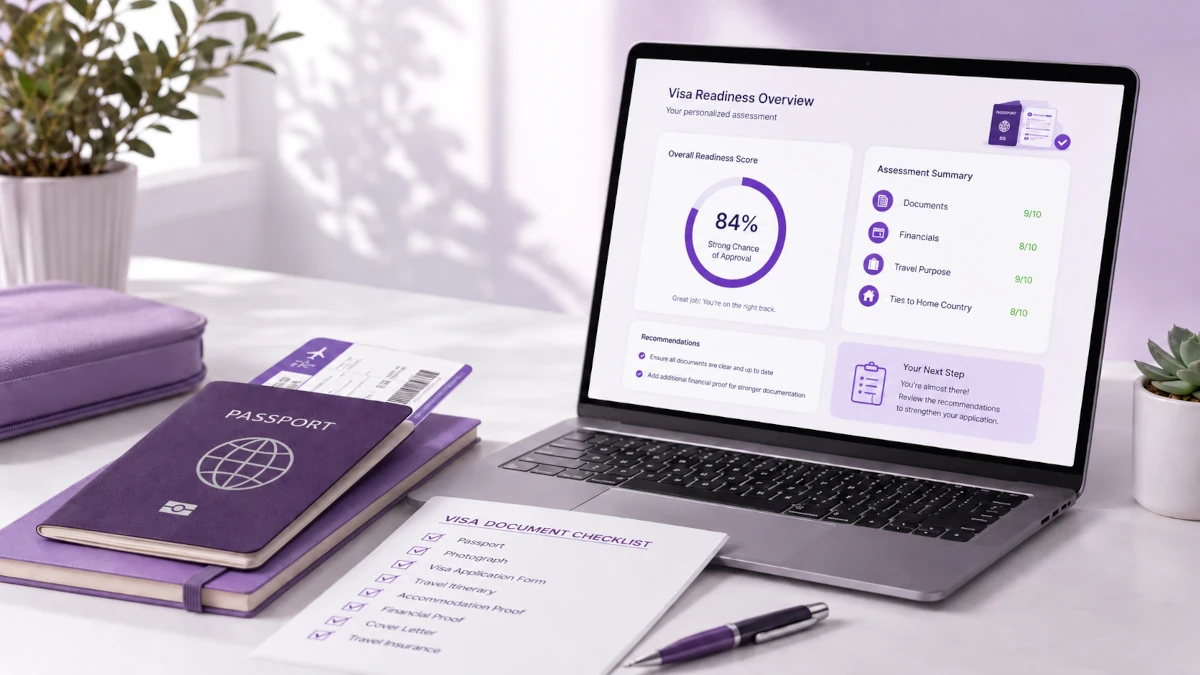
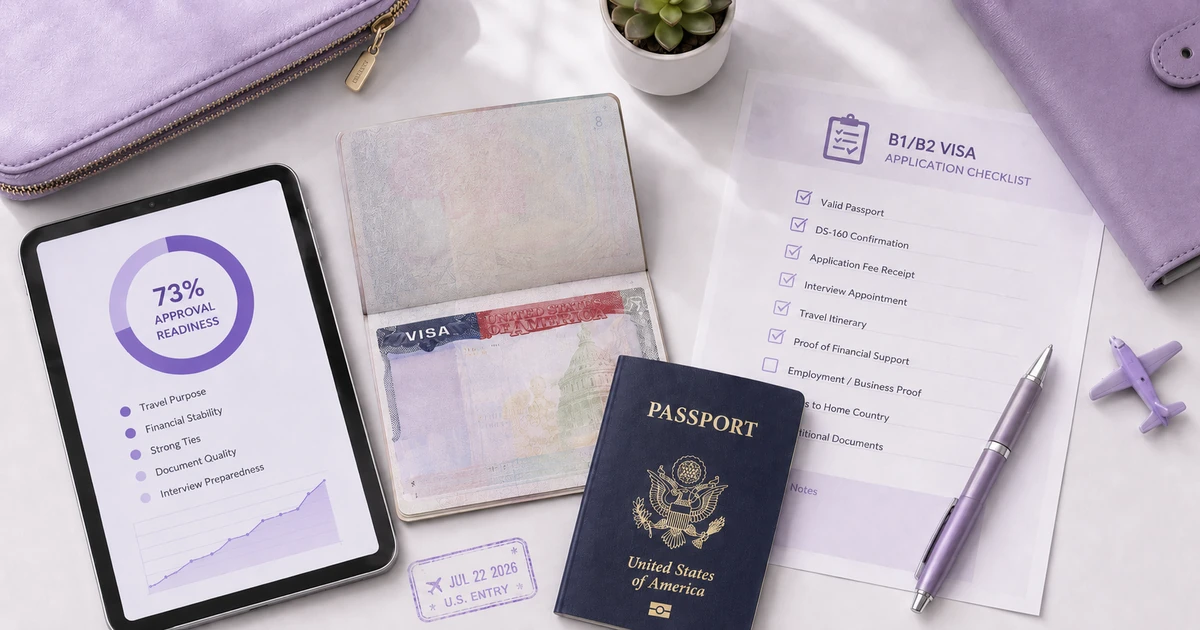
Direct answer: Your US B1/B2 visa approval chances depend on whether you show a genuine temporary purpose, credible finances, stable employment or circumstances, meaningful reasons to return home, consistent documents, and honest interview answers. Nationality-level refusal data provides context, but it cannot predict an individual decision or replace the consular officer's assessment.
This guide is general preparation information, not legal advice or a promise of approval. Rules and procedures can change, so confirm current instructions on the official website of the US embassy or consulate where you will apply.
Key takeaways
- A B1/B2 applicant must qualify for a temporary business or tourism visit; there is no guaranteed approval formula.
- Your DS-160, documents, and interview answers should describe the same purpose, dates, funding, and personal circumstances.
- Strong home ties can include work, study, business, close family responsibilities, or other ongoing commitments.
- Country refusal rates describe past groups of applicants, not your personal probability.
- Honest, concise answers are stronger than memorized speeches or documents created only to impress an officer.
What Are Your US Visa Approval Chances?
Your personal chances cannot be calculated from nationality or income alone. Under US immigration law, a B1/B2 applicant generally needs to satisfy the consular officer that the trip is temporary and that they qualify for the visitor category. The officer reviews the application as a whole, often during a short interview.
A strong case clearly answers: Why are you traveling? Who will pay? How long will you stay? What will you do in the United States? Why will you leave afterward? The facts should make sense together.
Before deciding that one weak point will cause refusal, review the broader reasons visas are rejected. A modest income, limited travel history, or being self-employed is not automatically fatal. Problems usually arise when the trip looks unaffordable, the purpose is vague, answers conflict, or the applicant does not establish eligibility.
Is your bank balance enough for your visa?
Check your personal approval chances with GetDocuTrip's Visa Predictor. It scores your bank balance against your destination, nationality, employment, and travel history.
Six Factors That Affect B1/B2 Approval
No public checklist reveals exactly how an officer will weigh every fact. Still, the following six areas help you assess whether your application tells a coherent and credible story.
1. Financial ability to pay for the trip
Your finances should support the length and style of travel you describe. A seven-day family visit has a different budget from a month-long multi-city holiday. Officers may consider your income, savings, trip cost, who is paying, and whether sponsorship is believable.
There is no universal official minimum bank balance for a US visitor visa. A large balance does not guarantee approval, and a smaller balance does not automatically mean refusal. What matters is whether the funding is credible for your circumstances. Sudden deposits, borrowed money presented as savings, or a trip that consumes an implausibly large share of your funds can raise questions.
Use the bank balance for visa guide to review account history, explainable deposits, sponsor evidence, and realistic budgeting. Bring supporting evidence if it is relevant, but expect to explain the financial arrangement simply in your own words.
2. Employment, study, or business stability
Stable work can support both your ability to fund the trip and your reason to return. Useful facts include your role, length of employment, approved leave, income, and expected return date. Students can explain their enrollment; business owners can describe ongoing operations and commitments.
Being a freelancer, homemaker, retiree, student, or unemployed does not automatically disqualify you. It means your case may rely on different evidence. A freelancer might show long-running contracts and regular payments; a retiree may show pension income and family responsibilities. Do not invent conventional employment because you think it looks better. Misrepresentation creates a much more serious problem than an unconventional profile.
3. Travel history and immigration compliance
Previous international travel can show that you traveled temporarily and followed immigration rules. Used visas and timely departures may support credibility.
However, first-time travelers can be approved. There is no requirement to collect stamps in easier destinations before applying for a B1/B2 visa. If you have limited travel history, focus on a clear purpose, realistic finances, accurate information, and strong reasons to return. If you previously overstayed, were refused, or had an immigration problem, disclose it accurately wherever the form asks. Hiding it can be worse than the underlying event.
4. Home-country ties and intent to return
For many visitor applicants, this is the central issue. The officer must be satisfied that you intend to leave the United States after a temporary stay. Ties are not limited to owning property. They can include stable employment, active study, a functioning business, dependent family members, professional duties, a lease, community responsibilities, or a clear life plan based at home.
The best ties are real, ongoing, and consistent with your situation. Indian, Filipino, Indonesian, and other applicants should explain their actual commitments rather than copying a generic interview script.
5. Document strength and consistency
The DS-160 is a core part of the case. Review it carefully before the interview. Your travel dates, US contact, employment history, prior travel, funding, and purpose should be accurate. If circumstances change after submission, follow the relevant embassy's instructions rather than improvising an answer.
Supporting documents should reinforce the application, not create a second version of it. Check names, dates, salary figures, invitation details, and sponsor relationships. Start with a practical visa document checklist, then check the specific instructions for your embassy or consulate. An officer may not request every document you carry, so prepare to explain the essential facts without relying on a thick folder.
Never use altered bank statements, fake employment letters, or invented invitations. A weak but truthful fact can be explained; false evidence can damage eligibility and future applications.
6. A specific, credible travel purpose
B1 generally covers qualifying temporary business activities, while B2 generally covers tourism, visits, and certain other temporary purposes. A combined B1/B2 visa does not authorize employment in the United States. Your stated plan must fit the visitor category.
Be ready to describe where you will go, how long you will stay, whom you will visit, and why the timing makes sense. Tourism needs a realistic outline; business travel needs a legitimate activity and appropriate duration.
You do not need to recite an hour-by-hour itinerary. You do need a plan that sounds like your own. Vague answers, a duration that keeps changing, or an invitation that conflicts with the DS-160 can undermine credibility.
B1/B2 Approval Rates by Nationality
The US Department of State publishes an adjusted refusal rate for B visas, not a personal approval score. Its calculation counts a unique applicant by their final status for the fiscal year and accounts for certain refusals that were later overcome. The latest complete figures available for this 2026 guide are from fiscal year 2025.
The “approximate issued share” below is simply 100% minus the adjusted refusal rate. It is included to make the table easier to read; it should not be treated as your chance of approval. The official data is worldwide by nationality, not limited to one embassy, age group, occupation, or first-time applicant.
| Nationality | FY2025 adjusted B-visa refusal rate | Approximate issued share* |
|---|---|---|
| India | 22.04% | 77.96% |
| Philippines | 30.76% | 69.24% |
| Indonesia | 26.69% | 73.31% |
| China | 20.21% | 79.79% |
| Vietnam | 22.08% | 77.92% |
| Thailand | 25.67% | 74.33% |
| Pakistan | 52.32% | 47.68% |
| Bangladesh | 61.45% | 38.55% |
*Calculated as 100% minus the published adjusted refusal rate; it is not an individual prediction. Source: US Department of State FY2025 adjusted refusal rates for B visas. The Department also explains how the adjusted rate is calculated.
These numbers are context, not a personal forecast. The pool includes applicants with very different purposes, finances, histories, and eligibility issues. Your task is to present your real case clearly and truthfully.
How to Improve Your Preparation Before the Interview
Begin by reading your submitted DS-160 from start to finish. Make a short factual summary of your trip: purpose, intended dates, destination, accommodation, funding, and return commitments. If you cannot explain those points consistently, resolve the confusion before the appointment.
Next, test whether the cost fits your normal finances. Identify large account movements and keep genuine evidence of their source. If another person pays, understand why and how their finances support the plan.
Then check your return story. This is not about delivering a dramatic promise. It is about explaining the ordinary obligations and opportunities that bring you home. Specific facts—such as approved leave ending on a date, a semester resuming, clients awaiting work, or dependents in your care—are more useful than saying, “I will definitely return.”
Finally, practice answering naturally. Listen to the exact question, respond briefly, and add detail only when useful. Do not memorize someone else's answers or hide facts because an online video calls them “red flags.” If you want a structured pre-application review, see how to check visa approval chances and use the result as a preparation checklist, never as a guarantee.
Get unlimited visa checks with GetDocuTrip Pro
Unlock unlimited AI Visa Approval Predictions, advanced travel planning tools, visa deadline tracker, and personalized recommendations. From $9.99/month.
Frequently Asked Questions
Is a B1/B2 visa easier to get for Indians, Filipinos, or Indonesians?
No nationality is guaranteed an easier individual decision. Fiscal-year refusal rates differ by nationality, but they combine many kinds of applicants and circumstances. Officers decide each application on its facts. Use national data as background only, then focus on your purpose, finances, ties, accuracy, and eligibility.
How much bank balance is required for a US visitor visa?
There is no single official amount that guarantees a B1/B2 visa. Your available funds should be credible for the trip's cost and duration, considering who will pay. Regular income and explainable account activity generally tell a clearer story than a large last-minute deposit.
Does having a US sponsor guarantee B1/B2 approval?
No. An invitation or sponsor can explain accommodation or funding, but it does not remove the applicant's need to qualify. Be accurate about the relationship, purpose, costs, and length of stay. The officer still assesses the complete application and the applicant's temporary intent.
Can I get a US visitor visa without travel history?
Yes. First-time international travelers can receive B1/B2 visas. With no prior travel record, make the other parts of the case especially clear: a realistic purpose, credible finances, accurate DS-160 information, and genuine reasons to return home.
What should I do after a B1/B2 refusal?
Read any refusal information you receive and identify what has materially changed before applying again. A new application with the same facts may lead to the same result. Do not conceal the refusal; answer future application questions honestly and seek qualified legal advice if your situation is complex.
Check Your Profile Before You Apply
No website can promise a US visa, but a structured review can uncover gaps while you still have time to address them. Check your finances, purpose, home ties, travel history, and document consistency before your interview.
Is your bank balance enough for your visa?
Check your personal approval chances with GetDocuTrip's Visa Predictor. It scores your bank balance against your destination, nationality, employment, and travel history.
Use the AI Visa Approval Predictor for a personalized preparation review. Treat the result as guidance for what to strengthen—not an official decision or guarantee of approval.
Have a question about this article?
Our team reads every question and responds within 24 hours.
Meet the Author

Mentari Rahman
Founder & Travel Visa Expert
A tech leader who has traveled to 38 countries across 4 continents, Mentari has spent over 8 years working in the tech industry. She worked as an SEO Outreach Specialist at Canva and spent 7 years as Country Manager at Financer before founding GetDocuTrip.