Quick answer
Learn common UK Standard Visitor visa rejection reasons and practical ways to strengthen finances, documents, travel purpose, and return-home evidence.
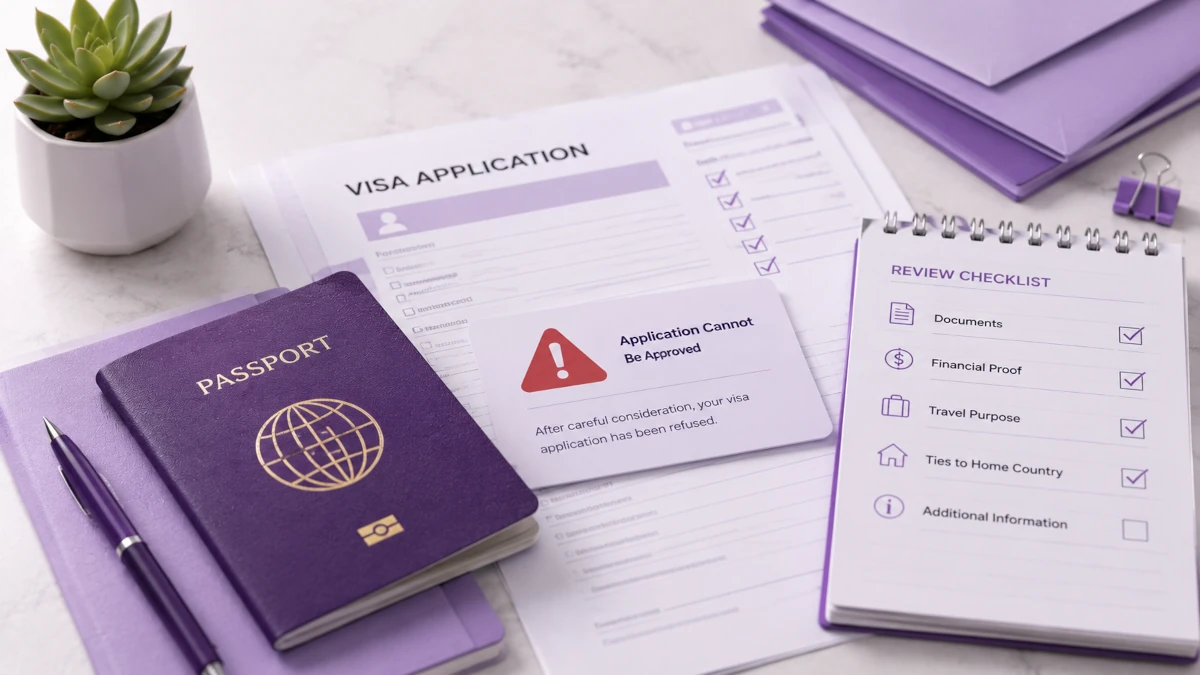
A UK Standard Visitor visa refusal can be expensive and frustrating, but it is rarely useful to think of it as bad luck. The decision usually turns on whether your application proves that you are a genuine visitor whose trip, finances, personal circumstances, and intention to leave the UK all make sense together.

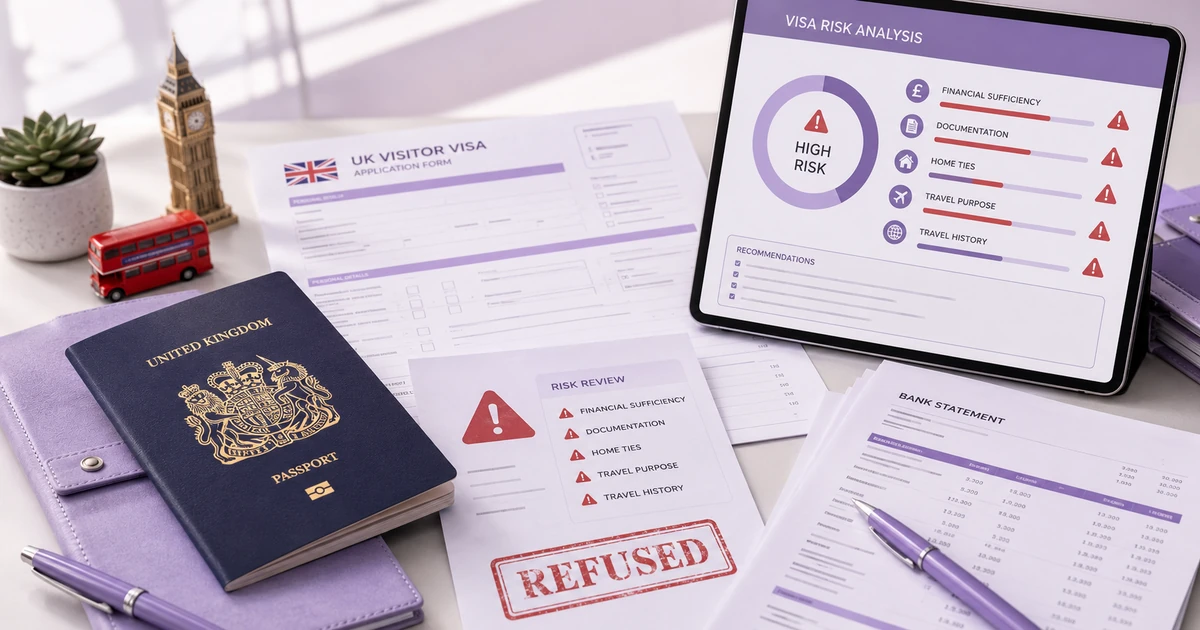
Direct answer: The most common UK Visitor visa rejection reasons are insufficient or unexplained funds, weak employment evidence, limited proof that you will return home, an unclear or non-permitted travel purpose, inconsistent documents, and an application that does not credibly explain your circumstances. Reduce risk by making every claim specific, supported, and consistent.
This guide is general information, not legal advice. UK immigration rules and guidance can change. Check the current GOV.UK Standard Visitor guidance and consider regulated professional advice if your case is complex or you have a previous refusal.
Key takeaways
- There is no published minimum bank balance for a UK Standard Visitor visa; your funds must reasonably cover your specific trip.
- A large closing balance cannot fix unexplained deposits, weak income evidence, or a trip that looks unaffordable.
- Employment, study, business, family, and financial evidence can help show why you will leave the UK.
- Travel history is relevant context, but having no previous international travel is not an automatic refusal.
- Nationality-level refusal rates describe past decisions, not your personal chance of approval.
Is your bank balance enough for your visa?
Check your personal approval chances with GetDocuTrip's Visa Predictor. It scores your bank balance against your destination, nationality, employment, and travel history.
What Does UKVI Need to Believe?
Under Appendix V: Visitor, an applicant must satisfy the decision maker that they are a genuine visitor. In practical terms, UK Visas and Immigration (UKVI) must be satisfied that you will leave at the end of the visit, will not use repeated visits to make the UK your main home, are coming for a permitted purpose, and have enough money for the reasonable costs of the trip without working or accessing public funds.
That is why visitor visa decisions are not based on a single magic document. A bank statement, employment letter, invitation, and itinerary are useful only when they support one credible account of who you are, why you are travelling, how the trip will be paid for, and why you will return.
For a broader pre-application review, read 12 common visa rejection reasons. The UK-specific risks below deserve the closest attention.
Top UK Visitor Visa Rejection Reasons
1. Financial proof does not support the trip
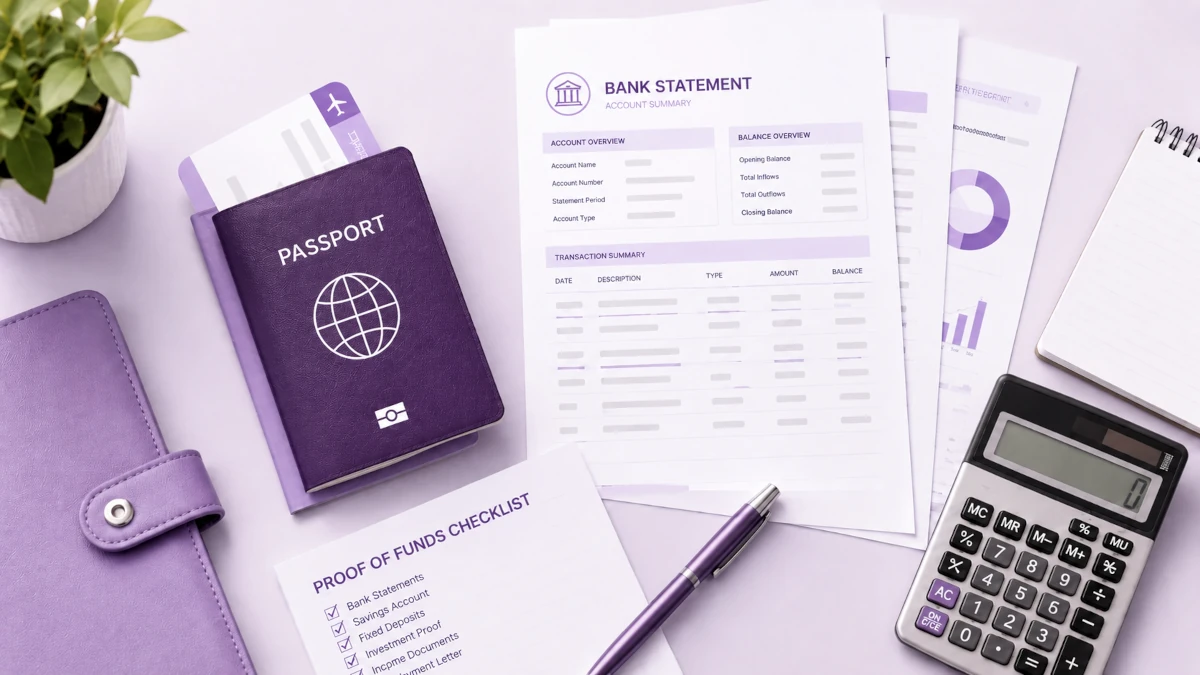
UK rules do not set one minimum balance that guarantees approval. The decision maker considers whether your available funds are sufficient for the reasonable cost of your visit, including accommodation, daily expenses, planned activities, and your return or onward journey.
A refusal risk appears when the trip cost is high compared with your income or savings. For example, a two-week holiday that consumes nearly all of your available money may look unrealistic even if the closing balance technically covers the bookings. Other warning signs include sudden deposits, borrowed money presented as savings, irregular income with no explanation, or statements that do not show where funds came from.
Reduce the risk by providing readable statements for the requested period, proof of earnings or business income, and evidence explaining any unusual transaction. If another person is paying, show the relationship, what they will cover, and that they can support you without financial difficulty. Our guide to bank balance for a visa application explains how to assess affordability and account history.
2. Employment, study, or business evidence is weak
Employment evidence helps UKVI understand both your income and your reason to return. A generic letter that only says you work for a company may leave important questions unanswered.
An employee can provide a letter on company letterhead confirming their role, salary, length of employment, approved leave, and expected return date, supported by payslips and matching salary deposits. A student can show current enrolment and authorised absence. A business owner or freelancer may need registration records, recent invoices, contracts, tax records, or client payments that demonstrate ongoing work.
Do not invent a conventional employment profile if your work is informal or remote. Explain the real arrangement and support it with the strongest evidence you genuinely have. A short, honest explanation is safer than documents that conflict.
3. Travel history creates unanswered questions
Previous lawful travel can support credibility because it shows that you travelled and complied with immigration conditions. But a first-time traveller is not automatically ineligible for a UK Visitor visa.
The risk comes from how travel history fits the rest of the application. If you have little travel history and are proposing a long or expensive first trip, UKVI may examine your purpose, funds, and home circumstances more closely. If you previously overstayed, breached visa conditions, or were refused a visa, disclose it accurately wherever the form asks. Explain what happened and what is different now.
Never hide an old refusal or omit a passport because you think it looks unfavorable. A truthful application with an explanation is more credible than one containing a material omission.
4. Home-country ties are not demonstrated
Applicants often say, “I have a job and family, so of course I will return.” A decision maker can assess only the information and evidence in the application.
Useful ties may include stable work, active studies, a functioning business, dependent family members, a lease or property, ongoing financial responsibilities, or a specific commitment after the trip. No single tie is mandatory, and property ownership is not a requirement. The goal is to show that your life outside the UK is established and that the proposed visit fits into it.
Indian, Pakistani, Nigerian, and other applicants should avoid copying a template that lists ties they do not have. Choose evidence that reflects your actual circumstances. If you are young, unemployed, retired, or financially sponsored, explain your situation directly and show the genuine reasons you will return.
5. Documents are missing, inconsistent, or unreliable
More documents do not necessarily make a stronger file. Relevant, readable, and internally consistent evidence does.
Common problems include different travel dates across the form and invitation, salary figures that do not match bank deposits, untranslated documents, unexplained sponsor transfers, missing pages, and accommodation that does not cover the whole stay. False or altered documents can lead to serious consequences beyond an ordinary refusal.
Before uploading, compare every document against a visa document checklist. Check names, passport details, dates, employer information, trip cost, sponsor details, and addresses. Include certified translations where required, with the translator's confirmation and contact details in the format specified by UK guidance.
The official supporting-document guide also warns that hotel bookings and flight bookings are generally less useful than evidence about your personal circumstances and available funds. Do not assume a paid ticket can rescue a weak application.
6. The purpose of the visit is unclear or not permitted
Your form and evidence should clearly explain why you are visiting, what you will do, where you will stay, how long you will remain, and who will pay. “Tourism” with no believable plan may be too vague; an overloaded itinerary can look equally artificial.
If you are visiting family or friends, explain the relationship and provide appropriate host details. For a business visit, connect the planned activity to a permitted visitor activity and include relevant correspondence or invitations. A Standard Visitor generally cannot take employment or run a UK business as a self-employed person, so do not describe work as tourism.
A concise cover letter can connect complicated facts, but it should not repeat the entire form or make claims that the supporting evidence cannot prove.
UK Visitor Visa Rejection Rates by Nationality
The table below is calculated from the UK Home Office entry clearance visa outcomes dataset for the year ending March 2026. It covers the Visitor visa group and calculates refused ÷ (issued + refused). Withdrawn and lapsed outcomes are excluded. Figures from 2025 onward are provisional and may be revised.
| Nationality | Visitor visas issued | Visitor visas refused | Refusal rate |
|---|---|---|---|
| India | 541,774 | 119,850 | 18.1% |
| Pakistan | 88,553 | 72,115 | 44.9% |
| Nigeria | 106,300 | 66,956 | 38.6% |
| Bangladesh | 19,498 | 22,949 | 54.1% |
| China | 487,108 | 43,379 | 8.2% |
These are outcome statistics, not a forecast for an individual applicant. They do not control for income, purpose, documents, previous immigration history, sponsorship, or other case facts. An outcome recorded during the period may also relate to an application submitted earlier. Use the table to understand broad context, never to assume that nationality alone determines a decision.
How to Reduce Your UK Visitor Visa Refusal Risk
Start with the genuine-visitor requirements, then build evidence around your real situation. A practical review looks like this:
- Define the trip. Write down the purpose, dates, accommodation, estimated cost, and who pays.
- Test affordability. Compare the full trip cost with regular income, savings, dependants, and normal expenses.
- Explain unusual money. Trace large deposits or transfers to their source with supporting records.
- Show your circumstances at home. Use current work, study, business, family, or financial evidence.
- Check the permitted activity. Confirm that everything you plan to do is allowed as a visitor.
- Reconcile every detail. Make names, dates, income, sponsor information, and travel plans consistent.
- Address history honestly. Disclose refusals or immigration problems when asked and explain material changes.
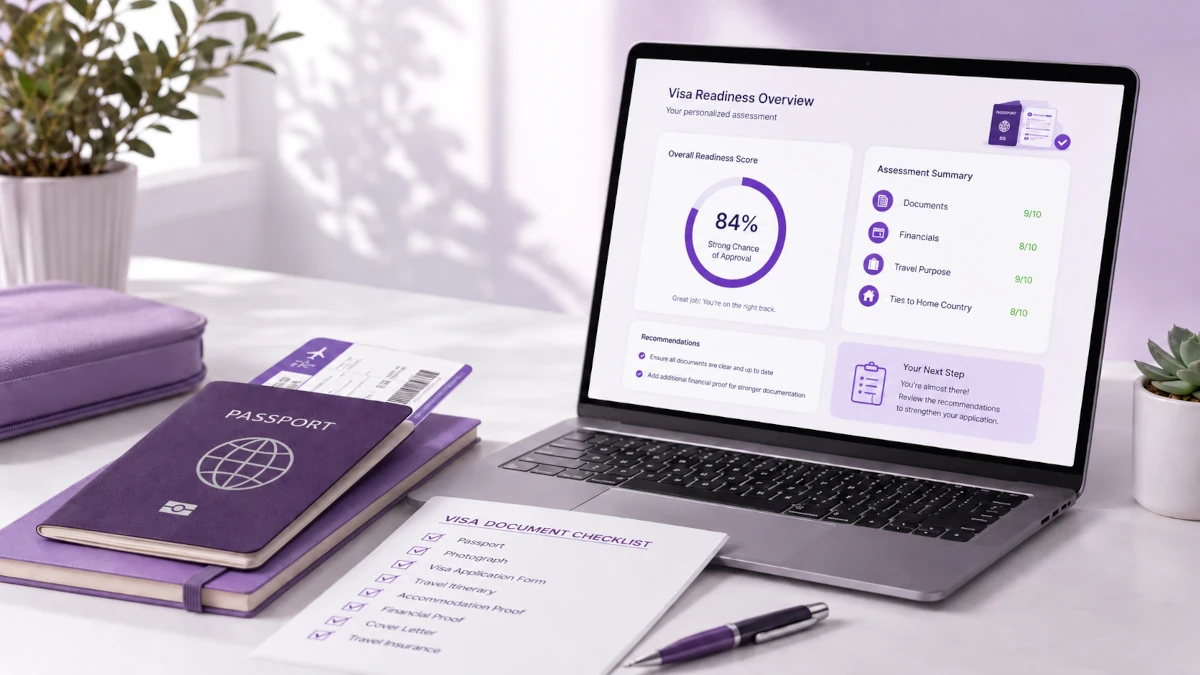
You can also check your visa approval chances before applying. Treat any checklist or risk score as preparation support, not a guarantee or a substitute for the official rules.
Get unlimited visa checks with GetDocuTrip Pro
Unlock unlimited AI Visa Approval Predictions, advanced travel planning tools, visa deadline tracker, and personalized recommendations. From $9.99/month.
Frequently Asked Questions
How much bank balance is required for a UK Visitor visa?
There is no fixed published minimum balance for a Standard Visitor visa. You must show enough accessible funds for the reasonable costs of your specific visit. UKVI can consider your income, regular commitments, dependants, trip length, accommodation, sponsor support, and the source of the money—not only the closing balance.
Can a UK Visitor visa be refused despite having enough money?
Yes. Sufficient funds are only one requirement. An application can still be refused if UKVI is not satisfied about the purpose of the visit, intention to leave, permitted activities, credibility of the evidence, or other eligibility requirements. Funds also need a credible and documented source.
Does no travel history cause a UK visa refusal?
No travel history is not an automatic refusal reason. It can mean that your finances, purpose, personal circumstances, and reasons to return carry more weight. Submit an honest first-time application rather than creating bookings or claims designed to imitate an experienced traveller.
Can I reapply after a UK Visitor visa refusal?
You can usually make a new application, but submitting the same evidence is unlikely to resolve the problem. Read the refusal letter carefully, correct factual errors, provide evidence that addresses the stated concerns, and disclose the previous refusal. Consider regulated advice if the decision involves deception, an exclusion period, or complicated immigration history.
Does an invitation letter guarantee a UK Visitor visa?
No. An invitation can support the purpose and accommodation arrangements, but it does not replace evidence that you meet the visitor requirements. UKVI can still consider your finances, sponsor's circumstances, relationship with the host, personal situation, and intention to leave the UK.
Review Your Risk Before You Apply
A strong UK Visitor visa application is not the one with the thickest upload folder. It is the one in which the purpose, money, work or study, home ties, travel history, and documents form a clear and credible whole.
Use the AI Visa Approval Predictor to identify preparation gaps before submission. It can help you organise your review, but it cannot guarantee approval or replace the decision made by UKVI.
Is your bank balance enough for your visa?
Check your personal approval chances with GetDocuTrip's Visa Predictor. It scores your bank balance against your destination, nationality, employment, and travel history.
Have a question about this article?
Our team reads every question and responds within 24 hours.
Meet the Author

Mentari Rahman
Founder & Travel Visa Expert
A tech leader who has traveled to 38 countries across 4 continents, Mentari has spent over 8 years working in the tech industry. She worked as an SEO Outreach Specialist at Canva and spent 7 years as Country Manager at Financer before founding GetDocuTrip.