Quick answer
Use this visa document checklist to prepare your passport, forms, funds, employment proof, itinerary, insurance, and route-specific documents before applying.
A visa application is not just a stack of documents. It is a story.

Your passport, bank statements, employment proof, itinerary, accommodation, and forms all need to say the same thing. If they do not, the file can look rushed, unclear, or incomplete. Before you apply, start with the official checklist, then check visa requirements by passport to understand route-level preparation.
Direct answer: A visa document checklist usually includes a valid passport, completed application form, passport photo, proof of funds, employment or study proof, travel itinerary, accommodation proof, flight reservation when required, travel insurance, invitation letter if relevant, and destination-specific supporting documents. Always verify the latest official requirements before applying.
This guide is not legal advice. Visa rules change by country, visa type, nationality, and application center. Use this as a preparation checklist, then verify every requirement with the official embassy, consulate, immigration authority, or visa application center for your destination.
Key takeaways
- There is no universal visa document checklist for every destination.
- Strong files are complete, current, readable, and consistent.
- Bank statements, employment proof, travel dates, and accommodation should match.
- Route-specific rules matter. Generic checklists are only a starting point.
- GetDocuTrip can help you review readiness, but final decisions are official decisions.
How this checklist connects to the rest of your application
Use this page as the document hub for the preparation cluster. The Schengen visa guide explains route and destination context, the bank balance guide covers financial evidence, and the Visa Approval Chances guide explains how the pieces are reviewed together. If travel evidence is required, use the flight reservation guide and verify it before submission.
What Is Visa Document Readiness?
Visa document readiness means your required documents are complete, current, consistent, and aligned with your travel purpose. Your names, dates, funds, employment details, accommodation, insurance, and flight reservation should tell the same clear story before submission.
Readiness is not about uploading the most files. It is about uploading the right files. A short, clean application that answers the official checklist is stronger than a folder full of random screenshots.
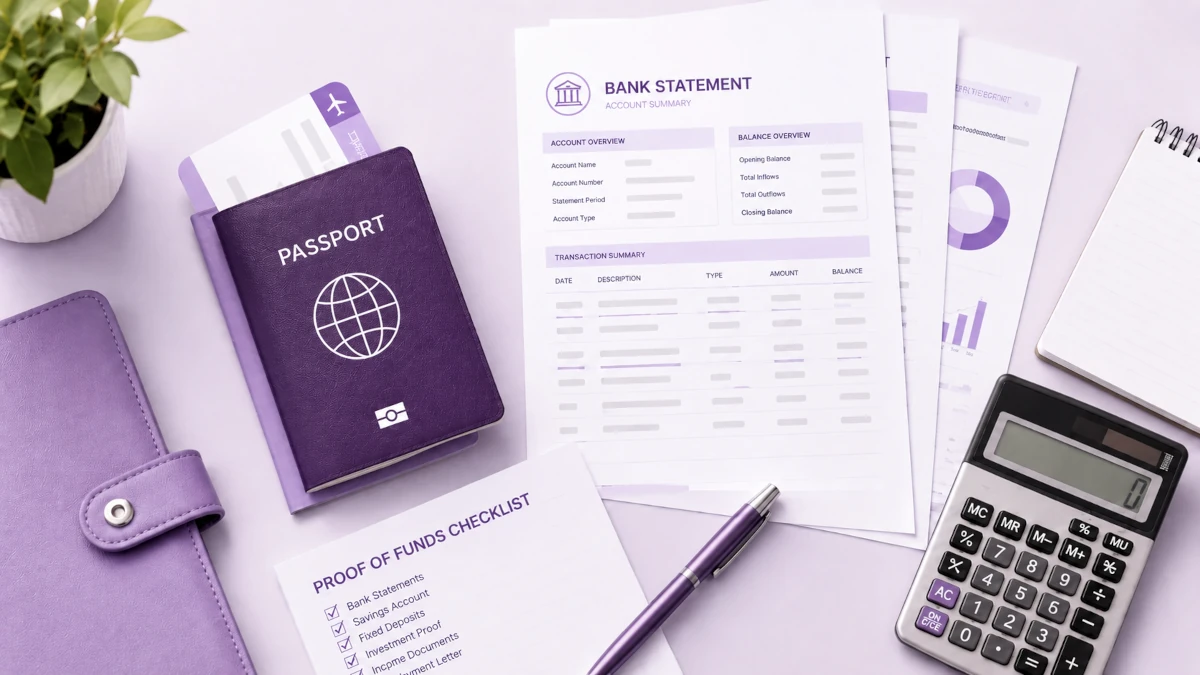
Quick Visa Document Checklist
Use this quick list before you get into the details:
- Valid passport or travel document.
- Completed visa application form.
- Passport photo that follows the destination's rules.
- Visa fee receipt, payment proof, or appointment confirmation.
- Bank statements and proof of funds.
- Employment, study, business, or freelance proof.
- Sponsor documents, if someone else is paying.
- Travel itinerary.
- Accommodation proof.
- Flight reservation, if required or useful for your route.
- Travel insurance, if required.
- Invitation letter, if visiting someone or attending an event.
- Destination-specific documents.
- Translations or certified copies, if required.
- Final review for names, dates, and consistency.
That list is not a promise that every visa requires every item. It is a preparation map. Your official checklist is still the source of truth.
Passport and Identity Documents
Your passport is the anchor document. Everything else should match it.
Check the basics first:
- Full legal name.
- Passport number.
- Date of birth.
- Nationality.
- Passport issue and expiry dates.
- Signature, if required.
- Blank visa pages, if a sticker visa is used.
- Previous passports, if the checklist asks for them.
Many applicants lose time on simple passport problems. The passport is close to expiry. The application form uses a shortened name. The flight reservation drops a middle name. The old passport has travel history, but the applicant forgets to include it.
If your passport has a naming format that often causes confusion, write your application consistently. Use the same spelling everywhere. Do not switch between full name, nickname, initials, and shortened versions.
Visa Application Form
The application form is where your story begins. If the form is wrong, every supporting document has to work harder.
For US visitor visas, Travel.State.gov says applicants complete the online DS-160 and print the confirmation page for the interview. Other countries use different forms, portals, or visa application center workflows. The principle is the same: the form should match the evidence.
Check these fields carefully:
- Passport details.
- Travel dates.
- Address and contact information.
- Employment or education status.
- Income or sponsor information.
- Travel history.
- Previous visa refusals, if asked.
- Host or invitation details.
- Accommodation address.
Do not guess on official forms. If you are unsure how to answer a question, check the official guidance or get qualified help. Guessing can create inconsistencies that are hard to explain later.
Passport Photo
Visa photos are boring until they get rejected.
Photo rules can cover size, background, face position, glasses, file format, recency, and digital dimensions. Travel.State.gov, for example, says DS-160 applicants upload a digital image as part of the online form, and its digital image requirements include square dimensions between 600 x 600 and 1200 x 1200 pixels.
Do not reuse an old social media photo. Do not crop a vacation picture. Do not assume one country's photo rules work for another country.
Check:
- Size and dimensions.
- Background color.
- Face position.
- Glasses and head covering rules.
- File format.
- Print quality, if printed photos are needed.
- Whether the photo must be recent.
If the photo is wrong, the application may be delayed or you may need to bring a replacement.
Fee Receipt and Appointment Confirmation
Some visas require payment before appointment booking. Others collect fees at a visa application center. Some require a separate service fee, biometrics appointment, courier fee, or document upload step.
Keep copies of:
- Visa fee receipt.
- Appointment confirmation.
- Biometrics confirmation.
- Document upload receipt.
- Payment reference number.
- Courier or return passport confirmation, if relevant.
This is not just admin. If a visa center cannot match your payment, appointment, or passport return details, your application day becomes harder than it needs to be.
Save these files in one folder. Use plain names like visa-fee-receipt.pdf and appointment-confirmation.pdf. Future you will be grateful.
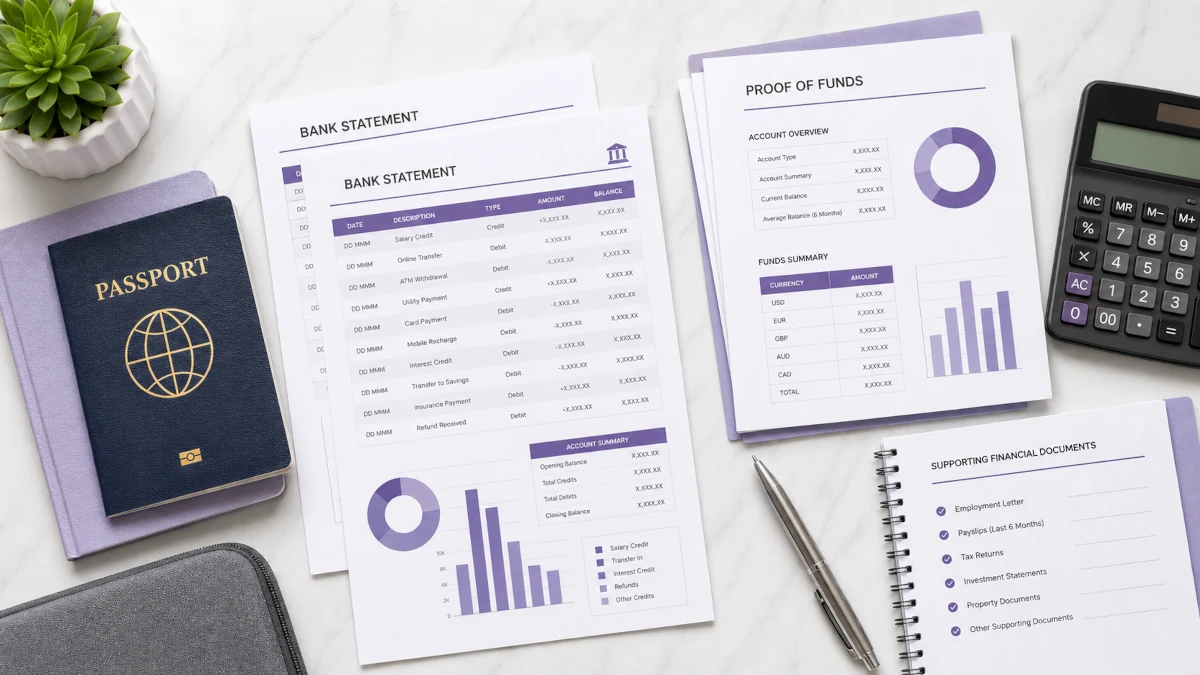
Bank Statement and Proof of Funds
Bank statements show whether your trip looks financially realistic.
A strong financial file usually shows stable income, normal spending, and enough funds to cover the trip without draining the account. A weak file may show a low balance, sudden unexplained deposits, inactive statements, or funds that do not match the travel plan.
For a deeper guide, read our bank balance requirements for visas. The key idea is simple: officers do not only look at the final balance. They look at the pattern.
Prepare:
- Recent bank statements.
- Salary slips or payslips.
- Tax records, if relevant.
- Sponsor bank statements, if someone else pays.
- Explanation for unusual deposits.
- Business account statements, if self-employed.
If your trip costs $3,000 and your account barely covers it, the application may feel tight. If your account suddenly receives a large transfer two days before applying, explain the source with documents.
Employment, Study, or Business Proof
Employment, study, or business proof helps show what you do and why you are likely to return.
Employees usually need a letter that confirms role, start date, salary, approved leave, and expected return date. Students may need enrollment proof, leave permission, and school details. Business owners may need registration, tax records, invoices, contracts, or company bank statements.
Freelancers and digital nomads should be extra organized. If your work is real but remote, prove it with contracts, invoices, payment records, tax filings, and bank activity. Do not expect an officer to understand your income model without evidence.
Useful documents can include:
- Employment letter.
- Leave approval.
- Payslips.
- Student enrollment letter.
- Business registration.
- Client contracts.
- Invoices and payment records.
- Tax documents.
This is also where consistency matters. Your job title, salary, employer name, and leave dates should match the application form and bank records.
Sponsor Documents
Sponsor documents matter when someone else pays for your trip or supports your stay.
A sponsor file should explain who the sponsor is, how they are connected to you, what they are paying for, and whether they can afford it. A sponsor with no relationship proof or weak financial evidence may not help much.
Prepare, where relevant:
- Sponsor letter.
- Sponsor passport or ID copy.
- Proof of relationship.
- Sponsor bank statements.
- Sponsor employment or business proof.
- Invitation details, if the sponsor is also the host.
Do not treat sponsorship as a magic fix for weak funds. The officer may still ask why the sponsor is paying, whether the relationship is credible, and whether the trip purpose makes sense.
Travel Itinerary
A travel itinerary should make your trip understandable.
It does not need to be a minute-by-minute schedule. It should show where you plan to go, when you plan to arrive, how long you plan to stay, and why the route makes sense. This is especially useful for Schengen trips with multiple countries.
If you are applying for Schengen, read our Schengen visa document preparation guide before you finalize the route. Embassy choice, nights spent in each country, and entry point can matter.
Check:
- Arrival and departure dates.
- Cities and countries.
- Main purpose of each stop.
- Hotel dates.
- Flight reservation dates.
- Leave approval dates.
- Insurance coverage dates.
Your itinerary should match the rest of the file. If it does not, fix the dates before submission.
Accommodation Proof
Accommodation proof shows where you plan to stay.
Depending on the destination, this may be hotel booking, host invitation, rental proof, conference accommodation, or a family address. Some countries treat accommodation as required. Others treat it as supporting evidence. Always check the official source.
Watch for these mistakes:
- Hotel dates do not match itinerary.
- Booking is under someone else's name with no explanation.
- Address is incomplete.
- Host invitation is missing.
- You list one city on the form and another in the booking.
If your travel plan changes after approval, that is different. The application itself should still be coherent at the moment you submit it.
Flight Reservation
A flight reservation is useful when the destination asks for proof of travel plans, onward travel, or return travel. It is not the same as buying a full non-refundable ticket.
Some official guidance discourages buying tickets before visa approval. Some destinations ask for a reservation or itinerary. Some do not need flight proof at all. This is why you should verify the specific route before paying for anything.
If you need one, use a real, verifiable reservation. GetDocuTrip's verifiable flight reservation for visa is a separate paid product, not included in Pro, with public pricing from US$14.99 to US$24.99 depending on processing speed.
Check:
- Passenger name matches passport.
- Travel dates match the application.
- Route matches the itinerary.
- PNR or booking reference can be verified.
- Reservation is still valid at submission.
Do not submit fake travel documents. A fake document can damage trust in the whole application.
Travel Insurance
Travel insurance is required for some visa types and optional for others.
Schengen tourist visas commonly require travel medical insurance that covers the Schengen area and the full stay. Other destinations may have different rules, no insurance rule, or insurance recommendations rather than requirements.
Check:
- Coverage dates.
- Destination coverage.
- Minimum coverage amount, if specified.
- Applicant name.
- Policy number.
- Emergency medical coverage.
- Repatriation or evacuation coverage, if required.
Do not assume your credit card insurance is enough. If the official checklist asks for a specific type of coverage, compare your policy against that wording.
Invitation Letter
An invitation letter helps when you are visiting family, friends, a company, an event, or an institution.
A useful invitation letter usually explains who is inviting you, why you are visiting, where you will stay, how long you will stay, and whether the host is paying for anything. It should match your application form and itinerary.
Depending on the route, supporting documents may include:
- Host ID or passport copy.
- Host residence permit.
- Proof of address.
- Relationship proof.
- Company registration.
- Event registration.
- Sponsor financial proof.
Do not let the invitation letter create confusion. If the host says you will stay 30 days but your form says 12 days, fix it before applying.
Destination-Specific Documents
Destination-specific documents are the reason generic checklists can fail.
A US visitor visa, UK visitor visa, Schengen visa, Japan tourist visa, and Australia visitor visa can all ask for different evidence. Even the same destination can vary by nationality, appointment location, visa type, and applicant profile.
Use route-level pages as preparation context, then verify the official checklist. Examples:
Destination-specific items may include:
- Biometrics appointment.
- Cover letter.
- Civil documents.
- Marriage certificate.
- Birth certificate for minors.
- Parental consent.
- Previous visas.
- Tax documents.
- Local ID or residence permit.
- Country-specific forms.
If you want a fast starting point, use the free visa requirements checker, then confirm the official source.
Translations and Certified Copies
Translations can be easy to miss because they feel like formatting, not substance.
Some destinations require documents in a specific language. Some require certified translations. Some accept documents in English. Some need original documents and copies. The rules vary, so check the application center or official guidance.
Documents that may need translation include:
- Birth certificate.
- Marriage certificate.
- Family registration.
- Business registration.
- Tax documents.
- Employment letters.
- School letters.
- Court or immigration records.
Do not translate only half the file. If a supporting document matters and the officer cannot read it, it may not help your application.
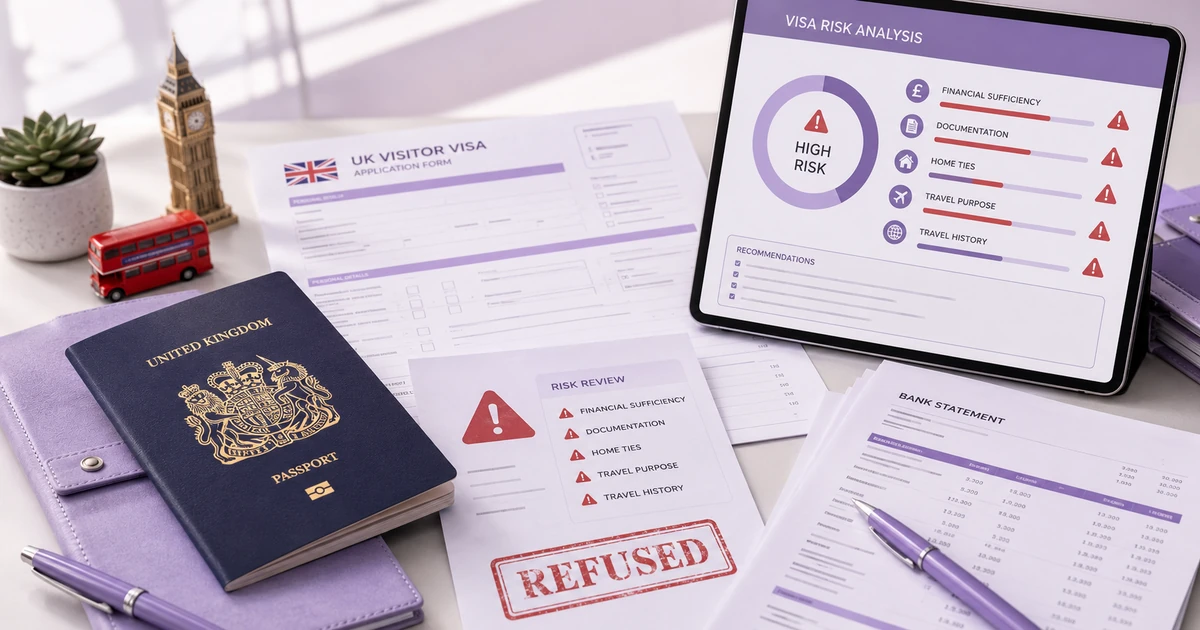
Common Visa Document Mistakes
Most document mistakes are small. That is what makes them annoying.
You can spend weeks preparing and still miss a signature, upload an unreadable scan, forget a translation, or submit a bank statement with an unexplained transfer. The fix is a slow final review.
Common mistakes:
- Expired passport.
- Wrong photo format.
- Missing signature.
- Unclear scan.
- Bank statement too old.
- Travel dates do not match.
- Hotel and flight dates conflict.
- Employment letter lacks leave approval.
- Sponsor has no relationship proof.
- Invitation letter has different dates.
- Upload placed in the wrong category.
Our guide on what visa officers look for explains why consistency and credibility matter as much as the documents themselves.
Pre-Submission Review
Before you submit, review the file like a stranger would.
Do not ask, "Do I have many documents?" Ask, "Can someone understand my trip from these documents in five minutes?" That is a better test.
Use this review flow:
- Official checklist pass: compare your file with the official checklist.
- Identity pass: check name, passport number, birth date, and nationality.
- Date pass: compare form, leave letter, hotel, flight, insurance, and itinerary.
- Money pass: review bank balance, income pattern, and source of funds.
- Purpose pass: confirm the travel reason is clear.
- Upload pass: check file names, readability, categories, and format.
- Risk pass: review weak spots before paying or attending the appointment.
If you want a second look at your overall readiness, use GetDocuTrip's AI Visa Approval Predictor. It helps review visa approval chances, rejection risk, missing documents, and preparation gaps before applying. One AI Visa Approval Prediction costs US$4.99.
Visa Document Checklist Table
| Document category | Examples | Common problem | What to check |
|---|---|---|---|
| Identity | Passport, photo, application form | Expired passport or mismatched name | Names, numbers, expiry dates |
| Financial proof | Bank statements, payslips, sponsor proof | Weak funds or unexplained deposits | Balance, income pattern, source of funds |
| Work or study proof | Employment letter, leave approval, enrollment | Vague role or missing leave dates | Salary, dates, return date |
| Business or freelance proof | Registration, invoices, contracts, tax records | Income is real but not explained | Paper trail and matching deposits |
| Travel plan | Itinerary, accommodation, insurance, flight reservation | Dates do not match | Route, dates, names, coverage |
| Route-specific proof | Invitation, civil docs, translations, local forms | Generic checklist misses a rule | Official destination checklist |
Frequently Asked Questions
What documents are usually required for a visa application?
Most visa applications ask for identity documents, an application form, photo, financial proof, travel purpose evidence, and destination-specific supporting documents. But not every visa requires the same items. Always check the official embassy, immigration authority, or visa application center checklist.
Do I need a bank statement for every visa?
Not every visa uses the same financial evidence, but many visitor and tourist applications ask for proof that you can fund the trip. A bank statement is common because it shows balance, income pattern, and source of funds. See our bank balance guide for more context.
How many months of bank statements do embassies ask for?
It depends on the destination and visa type. Some checklists ask for recent statements, while others specify a period such as three or six months. Do not guess. Use the official checklist for your route and make sure the statements are current and readable.
Do I need a flight ticket or flight reservation for a visa?
It depends on the destination. Some applications ask for proof of travel plans, some accept a reservation, and some do not want applicants to buy tickets before approval. If a reservation is needed, use a verifiable document and make sure the dates match your application.
What happens if one document is missing?
A missing document can cause delay, a request for more evidence, or refusal, depending on the visa system and the missing item. The safest approach is to compare your file against the official checklist before submitting and fix gaps early.
Should I translate visa documents?
Translate documents if the official checklist, embassy, immigration authority, or visa application center requires it. Some destinations accept English documents. Others require certified translations. Check before submission, especially for civil documents, business records, and local-language employment letters.
How do I check visa requirements for my passport?
Start with official sources, then use route-level tools for preparation context. You can browse visa requirements by passport or use the Smart Navigator to understand the route before checking the official embassy or immigration source.
Can GetDocuTrip check whether my visa documents are ready?
GetDocuTrip can help you review visa approval chances, rejection risk, missing documents, and preparation gaps before applying. It does not replace official requirements or decide the result. Final decisions are made by embassies, consulates, immigration officers, or the relevant authorities.
Citation-Friendly Summary
A strong visa document checklist should cover identity, finances, employment or study proof, travel plans, accommodation, insurance, and destination-specific evidence. The documents should be complete, current, readable, and consistent with each other before submission.
Official guidance supports the same principle: Travel.State.gov requires DS-160 applicants to complete the online form and follow photo rules; GOV.UK tells applicants to check the visa guide and document checklist for evidence; application centers commonly require clear uploads in the correct category.
Final Check Before You Submit
Visa document readiness is not about building the biggest file. It is about building the clearest one.
Start with the official checklist. Check the route. Match the dates. Explain the money. Keep the travel plan realistic. Then review the whole file as if the officer has never met you, because they have not.
Use GetDocuTrip's AI Visa Approval Predictor to review your document readiness and preparation gaps before applying. Then browse visa requirements by passport and verify the final checklist with the official source for your destination.
Sources
- Travel.State.gov, Visitor Visa, retrieved 2026-07-09, https://travel.state.gov/content/travel/en/us-visas/tourism-visit/visitor.html
- Travel.State.gov, Photo Requirements, retrieved 2026-07-09, https://travel.state.gov/content/travel/en/us-visas/visa-information-resources/photos.html
- Travel.State.gov, Digital Image Requirements, retrieved 2026-07-09, https://travel.state.gov/content/travel/en/us-visas/visa-information-resources/photos/digital-image-requirements.html
- Travel.State.gov, DS-160: Frequently Asked Questions, retrieved 2026-07-09, https://travel.state.gov/content/travel/en/us-visas/visa-information-resources/forms/ds-160-online-nonimmigrant-visa-application/ds-160-faqs.html
- GOV.UK, Visiting the UK: guide to supporting documents, retrieved 2026-07-09, https://www.gov.uk/government/publications/visitor-visa-guide-to-supporting-documents/guide-to-supporting-documents-visiting-the-uk
- GOV.UK, Uploading evidence as part of your visa application, retrieved 2026-07-09, https://www.gov.uk/guidance/uploading-evidence-as-part-of-your-visa-application
- TLScontact, Documents Upload Guide, retrieved 2026-07-09, https://static.tlscontact.com/media/esolo_guidance_to_document_upload.pdf
Have a question about this article?
Our team reads every question and responds within 24 hours.
Meet the Author

Mentari Rahman
Founder & Travel Visa Expert
A tech leader who has traveled to 38 countries across 4 continents, Mentari has spent over 8 years working in the tech industry. She worked as an SEO Outreach Specialist at Canva and spent 7 years as Country Manager at Financer before founding GetDocuTrip.