Quick answer
No universal bank balance exists for a visa. Learn how to build a realistic trip budget, explain your income, and check official financial requirements.
There is no single bank balance that guarantees a visa. The amount you need depends on the destination, visa type, trip length, accommodation, income, sponsorship, and the evidence you can provide for the money in your account.

The practical question is not "What number gets approved?" It is "Can I show that I can pay for this trip without creating a financial story I cannot explain?" Start with the official checklist, build a realistic budget, then make sure your statements support that plan.
Key takeaways
- Official authorities generally assess your available funds together with your income, expenses, purpose of travel, and reason to return.
- Schengen countries use destination specific reference amounts. There is no single Schengen balance for every applicant.
- The UK, US, and Australia do not publish one universal visitor visa balance that applies to every traveler.
- A normal account history with explainable income is usually more useful than a large balance that appeared shortly before the application.
- A planning budget can help you prepare, but it is not an embassy formula or an approval prediction.
Continue through the visa preparation cluster
Financial evidence is one part of the file. Compare it with the visa document checklist, the Schengen visa guide, and the Visa Approval Chances guide. If your route requires travel evidence, use the flight reservation guide after the budget and dates are clear.
Why bank statements matter in a visa application
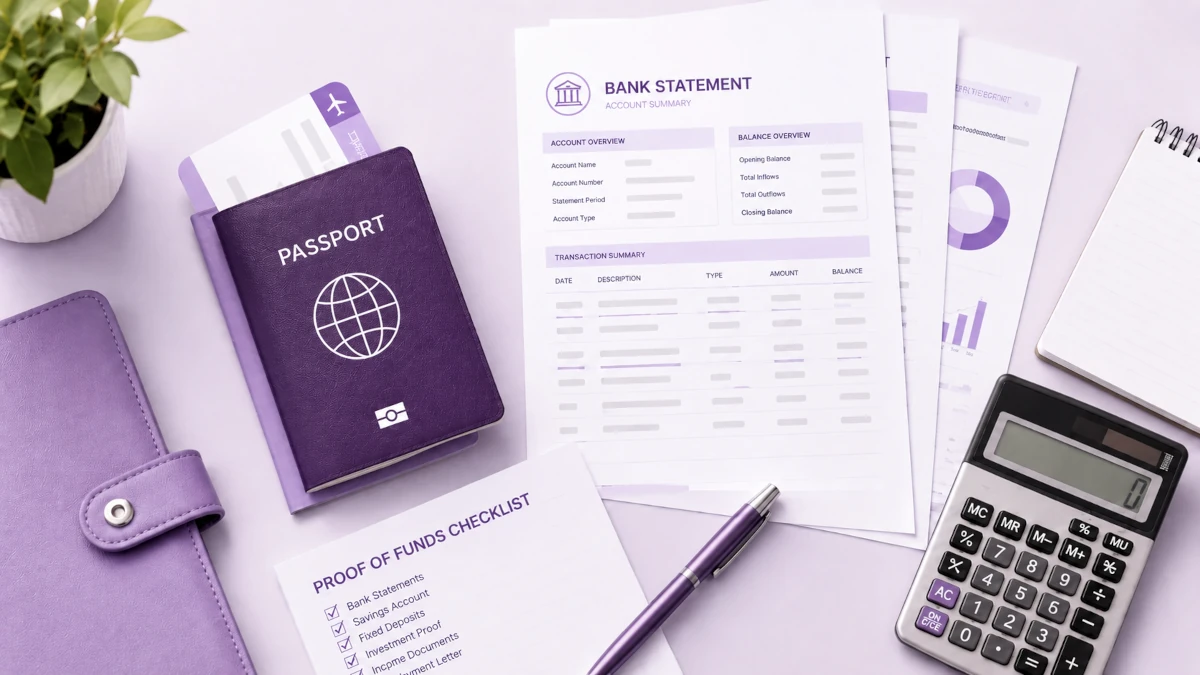
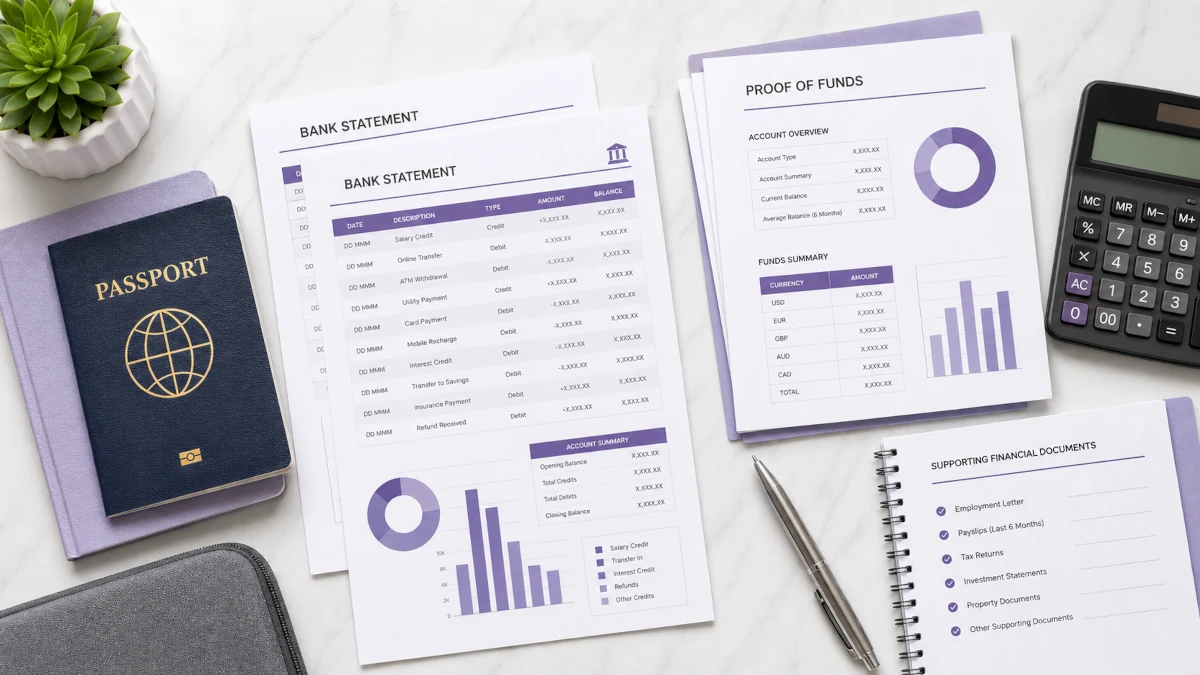
Financial documents help an officer assess whether your trip is affordable and whether the money fits the rest of your application. The statement is read alongside your itinerary, accommodation, employment, family situation, previous travel, and declared source of funds.
A balance by itself answers only one question: how much money was visible on a particular date. It does not explain how you earned it, what obligations you have at home, or whether the proposed trip is realistic for your normal income.
The European Commission's Schengen visa guidance and the EU Visa Code describe a broader assessment. Supporting documents can cover the purpose and conditions of the stay, sufficient means of subsistence, and the intention to leave before the visa expires.
That is why an applicant with a smaller but consistent account may present a clearer case than someone with a much larger balance and no explanation for recent deposits.
Is there a minimum bank balance for a visa?
For most visitor visas, there is no universal number. Some destinations publish reference amounts or maintenance rules. Others ask whether you can cover the trip and demonstrate credible circumstances without setting a fixed minimum.
The answer changes by destination:
- Schengen: The responsible country can apply its own reference amount for means of subsistence. The correct figure depends on the country handling the application and the type of stay.
- United Kingdom: Standard Visitor guidance focuses on whether you can support yourself during the visit, pay for your onward or return journey, and explain your circumstances. It does not give one bank balance that fits every visitor.
- United States: The Department of State does not publish a universal B1 or B2 bank balance. Officers consider the purpose of travel, ability to pay, ties outside the United States, and the overall application.
- Australia: Visitor applications are assessed on the circumstances of the trip and the applicant's ability to support the visit. The Department of Home Affairs does not set one public savings figure for every subclass 600 visitor.
Treat online numbers as planning examples unless they appear in the official checklist for your visa. A number copied from a consultant's article is not automatically a consular requirement.
How to calculate a realistic travel budget
A useful budget begins with the trip you are actually proposing. List the costs that an officer can compare with your itinerary, then include a reasonable cushion for ordinary changes. This gives you a planning figure without pretending that an embassy uses your calculation as an automatic score.
Add these items:
- Transport to the destination and the return or onward journey.
- Accommodation for every night in the itinerary.
- Food and daily spending based on the destination.
- Local transport, planned activities, and entry fees.
- Travel insurance and visa related costs.
- A reasonable reserve for changes or an unexpected expense.
Then compare the total with your normal income and existing obligations. A two week trip that costs most of your annual disposable income may need a clearer explanation, even when the account technically covers the invoice total.
For example, if an illustrative trip budget is $2,500, an applicant might prepare more than $2,500 so the account does not appear empty after the trip is paid. The extra amount is a personal planning buffer, not an official approval threshold.
Your budget should also match your documents. An expensive itinerary with a modest salary needs an explanation such as sponsorship, savings built over time, or a documented business income. Do not inflate the itinerary simply to make the account look more reasonable.
What do Schengen applicants need to show?
Schengen applicants need to follow the checklist of the country responsible for the application. The general EU framework asks for evidence connected to the purpose and conditions of the stay, means of subsistence, and the intention to leave. Each member state can publish more specific instructions and reference amounts.
The country where you spend the most time usually matters for the responsible consulate. If the stays are equal, the first country of entry can become relevant. Do not choose an application country only because an online article lists a lower financial amount.
Your documents should connect these facts:
- The duration and route of the trip.
- The cost of accommodation and transport.
- The funds available to you.
- Your regular income and employment or business situation.
- Any sponsor who will pay for part of the trip.
- Your reason for returning to your country of residence.
A short trip does not automatically require a specific global balance. Use the current checklist for the responsible country and the applicant's place of residence.
For the document sequence, see our Schengen visa guide and visa document checklist.
What do UK visitor visa officers look for?
The UK does not publish a single savings figure for every Standard Visitor applicant. The official guidance asks applicants to show that the visit is affordable and that they will leave at the end of the permitted stay. The evidence can include income, employment, business activity, savings, sponsorship, and the planned cost of the visit.
The source of money matters. If your bank statement shows salary deposits, the amount should make sense beside the employment letter and the trip budget. If a family member is paying, include the sponsor's relationship to you, financial evidence, and a clear explanation of what they will cover.
Do not copy the maintenance figure for a UK Student visa into a visitor visa application. Different visa routes use different financial rules. Always start with the official Standard Visitor guidance.
What is the US visitor visa balance requirement?
There is no official minimum bank balance for a US B1 or B2 visitor visa. The U.S. Department of State visitor visa guidance explains that applicants may need to show the purpose of the trip, their intention to depart, and their ability to pay the costs. The officer considers the whole situation rather than checking one published savings number.
That makes consistency especially important. Your DS 160, interview answers, employment information, travel dates, and financial documents should describe the same trip. A large balance does not replace a credible purpose of travel or evidence of ties outside the United States.
Avoid articles that promise one fixed US balance for every applicant. A consultant's budget example is not a universal State Department requirement.
What financial evidence may Australia require?
Australia visitor applications are assessed using the details of the proposed visit and the applicant's circumstances. The Department of Home Affairs Visitor visa subclass 600 guidance is the appropriate starting point for current document instructions.
Your evidence may include bank statements, payslips, employment records, tax documents, or sponsorship evidence, depending on the application. The documents should show that the trip is affordable and that the information in the application is credible.
Do not turn an informal agent benchmark into an Australian government rule. If the official checklist does not give a fixed figure, present a clear budget and explain the source of your funds instead.
How many months of bank statements should you prepare?
There is no single statement period that applies to every visa. Some application checklists specify a period. Others request recent evidence without using the same number of months. Follow the instructions for your destination, nationality, residence, and visa class.
When no exact period is stated, recent statements that show ordinary income and spending are more useful than one isolated balance certificate. Include enough context to explain salary payments, business income, transfers, savings, or sponsorship.
A bank letter can confirm the account and current balance. It may not show the transaction history that explains where the money came from. If the checklist asks for statements, do not replace them with a balance letter unless the responsible office says that is acceptable.
How should you explain a large deposit?
Explain it before the officer has to guess. A large deposit can be legitimate, but the supporting document should show its source and connection to your financial story.
Examples include a documented salary bonus, sale of property or a vehicle, transfer between your own accounts, maturity of an investment, or a gift from a sponsor. The supporting evidence depends on the source. A sale may need a contract. A transfer between your accounts may need statements from both accounts. A sponsor may need a sponsorship letter and evidence of the relationship.
Do not borrow money briefly to create an artificial balance. Do not edit statements or hide accounts. If the balance changed for a legitimate reason, a short explanation with documents is safer than silence.
What if your balance is not high?
A lower balance is not an automatic refusal. First, check whether it covers the realistic cost of your trip under the official rules. Then review the rest of the application.
You may have a stronger case if your income is regular, your accommodation is affordable, a sponsor is properly documented, your travel history is clear, and your ties to your country of residence are credible. You may have a weaker case if the trip is expensive compared with your income or if the account contains recent unexplained deposits.
If the trip is not urgent, wait until your finances and documents tell a clearer story. If you must apply now, shorten the itinerary, use accommodation that fits the budget, document the sponsor, or explain the financial gap honestly. A smaller realistic trip is easier to defend than an ambitious plan with no supporting evidence.
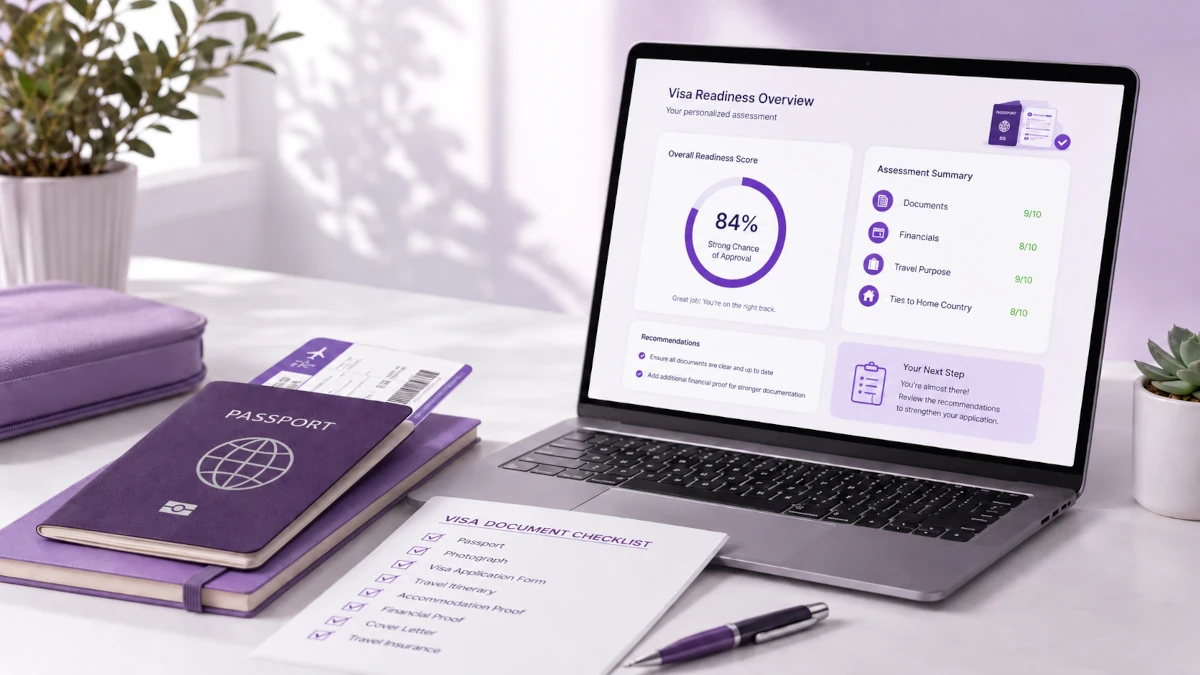
Check your visa approval chances as a preparation step. The Predictor is not an embassy decision and cannot guarantee an outcome.
Is your bank balance enough for your visa?
Check your personal approval chances with GetDocuTrip's Visa Predictor. It scores your bank balance against your destination, nationality, employment, and travel history.
How do savings, income, and sponsorship work together?
Savings show what is available. Income shows how the money is normally earned. Sponsorship explains who will pay when the applicant is not funding the trip alone. The application is easier to understand when these three parts fit together.
A sponsor does not remove the need for accurate documents. Include the relationship, the sponsor's financial capacity, the amount they will cover, and the applicant's own circumstances. Requirements vary, so use the current official checklist rather than assuming that a sponsorship letter is enough.
If you are self employed, use business records that show the business exists and generates income. If you are a student, include the evidence requested for family support and enrollment. If you are retired, show the relevant pension or savings evidence. The right documents depend on your situation.
Frequently Asked Questions
What is the minimum bank balance for a visa?
There is no universal minimum. Schengen countries can use destination specific reference amounts, while the UK, US, and Australia assess visitor applications more broadly. Check the official checklist for the exact visa route, then compare the required evidence with your realistic trip budget and normal finances.
Is three times the trip cost an official rule?
No. A reserve of three times the estimated trip cost can be a personal planning target, but it is not a universal embassy rule. Do not describe it as a guarantee or a required threshold. Your income, obligations, sponsorship, itinerary, and source of funds still matter.
Can I use my parents' bank account?
You may be able to use family sponsorship, but the documents depend on the visa route. Usually, the application needs a clear relationship, a sponsorship statement, evidence of the sponsor's funds and income, and an explanation of what the sponsor will pay. Check the official checklist before submitting.
Do visa officers check the source of my money?
They can ask questions about deposits, income, employment, and the cost of the trip. A statement does not become stronger just because the closing balance is high. If a large deposit has a legitimate source, keep the supporting evidence and explain it clearly.
How long should money stay in my account before applying?
There is no universal holding period. Some visa routes specify a period for financial evidence. Where they do not, a normal account history is easier to explain than a balance created immediately before the application. Use the current checklist and do not move money only to imitate a supposed threshold.
Does property count as financial proof?
Property or investments may support your overall circumstances, but they may not replace liquid funds needed for the trip. A property title does not automatically pay for flights, accommodation, or daily expenses. Submit the type of evidence requested by the responsible authority.
Do I need a flight reservation before showing my bank balance?
Your itinerary and budget should be consistent with your financial evidence. Whether you need a reservation depends on the visa checklist. If the route asks for travel plans, use a document that is accurate and verifiable. Read our flight reservation guide before submitting it.
Can the Visa Approval Predictor guarantee approval?
No. It is a preparation tool that helps you review factors such as finances, documents, employment, travel history, and destination. Only the responsible immigration authority can decide the application.
The bottom line
Prepare a bank balance that makes sense for the trip you are proposing, then show how the money was earned and how the rest of your application fits together. Official minimums, where they exist, are only one part of the assessment.
Do not chase a number copied from a blog. Check the current government or consulate checklist, build a realistic budget, explain unusual deposits, and submit documents that you can support with evidence.
Sources and official guidance
- European Commission: Schengen visa policy
- EUR Lex: EU Visa Code
- UK Government: Standard Visitor visa
- U.S. Department of State: Visitor visa
- Australian Department of Home Affairs: Visitor visa subclass 600
Requirements, fees, and document lists can change. Confirm the current instructions for your nationality, destination, visa class, and place of application before you submit.
Have a question about this article?
Our team reads every question and responds within 24 hours.
Meet the Author

Mentari Rahman
Founder & Travel Visa Expert
A tech leader who has traveled to 38 countries across 4 continents, Mentari has spent over 8 years working in the tech industry. She worked as an SEO Outreach Specialist at Canva and spent 7 years as Country Manager at Financer before founding GetDocuTrip.