Quick answer
Travel letter for visa: what to include, who asks for one (Germany, Norway, Switzerland, UK, Canada) and a template. Documents never guarantee approval.
A travel letter for a visa, also called a visa cover letter, is a one-page letter you write to the consulate. It states who you are, why you are travelling, where you will go and stay, how you will pay, and when you will return home. Not every country requires one, but some checklists ask for it by name, and a short accurate letter helps an officer read the rest of your file.

It is different from an invitation letter or a sponsor letter. Those come from someone else and prove a relationship or who pays. Your letter ties your documents together, so every date and number in it must match the documents behind it.
Key takeaways
- There is no single global rule: German missions list a "Personal covering letter", while Canada's IRCC checklist asks for "Purpose of Travel".
- Every date and number in your letter must match your flights, bookings and funds.
- Official UK, German and Canadian guidance says submitting documents never guarantees a visa.
What is the difference between a travel letter, an invitation letter and a sponsor letter?
According to the UK Home Office guide, your own letter covers your circumstances at home and the activity you'll do, while sponsors supply evidence of the support they provide and their relationship to you. An invitation letter comes from your host. Each letter has a different author and job, as the table shows.
| Letter | Written by | What it does | Typical use |
|---|---|---|---|
| Travel / cover letter | You, the applicant | Summarises purpose, itinerary, accommodation, funds and ties to your home country | Tourist, family and business visits |
| Invitation letter | Host in the destination country, or inviting company | States who is invited, why, for how long, and where they will stay | Visiting family or friends, business meetings, conferences |
| Sponsor letter | Person or organisation paying your costs | Confirms what they will pay for and shows they can afford it | When someone else covers travel or living costs |
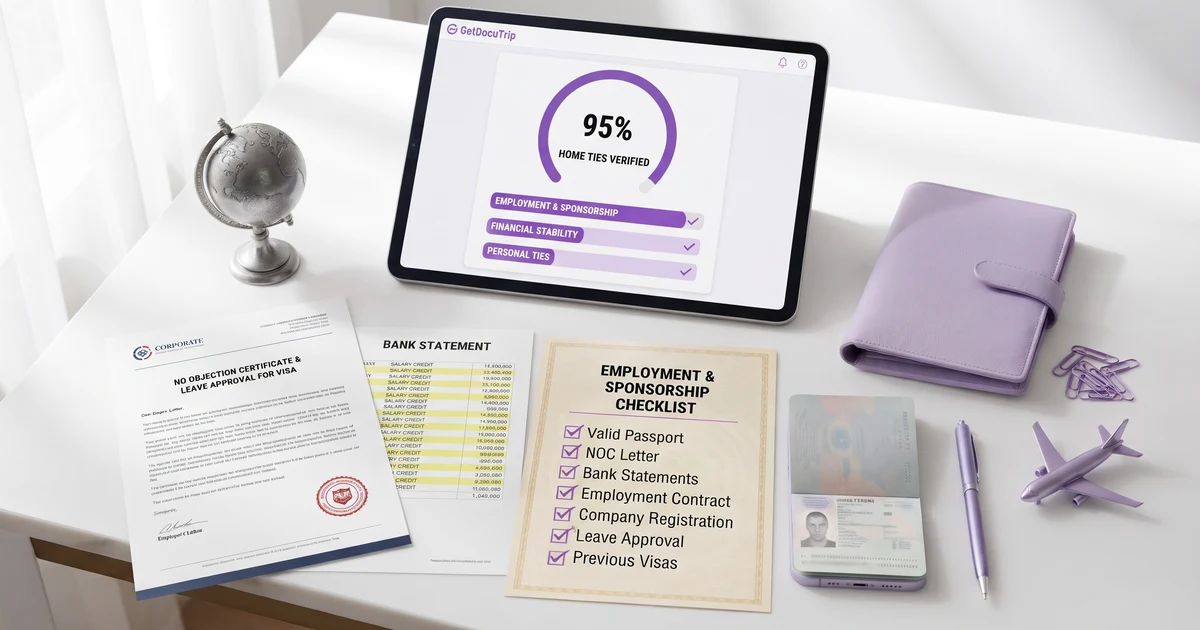
| Employer letter | Your employer | Confirms your job, leave dates and expected return | Employed applicants |
📋 Citation Capsule
A travel letter is written by the applicant, an invitation letter by the host or inviting organisation, and a sponsor letter by whoever pays. Canada's IRCC says the invitation letter comes from the person in Canada, and the UK Home Office asks sponsors to show evidence of their support.
If someone invites or sponsors you, their letter and yours must tell the same story.
When do authorities actually ask for a letter?
According to the German missions in India, the tourism checklist includes a "Personal covering letter / Proof of intended means of transport and itinerary". Other authorities ask for the same information without that name, so there is no single global rule. Here is what several official sources say.
Germany (Schengen). The German missions' tourism checklist includes an item titled "Personal covering letter / Proof of intended means of transport and itinerary". It also asks for proof of accommodation, a flight reservation, and financial and employment documents. The same page notes that submitting the listed documents does not guarantee a visa.
Norway (Schengen). The Norwegian consulate checklist (revised 10 July 2026) asks for a full itinerary, proof of accommodation, and, depending on the trip, an invitation letter from the inviter or organisation, or a dispatch letter from your employer on official letterhead. A private host can use the sponsorship and invitation form from the Norwegian Directorate of Immigration (UDI) instead of a free-form letter.
Switzerland (Schengen). The Swiss checklist for visitors asks for an invitation letter signed by the host that includes your full name as in your passport, dates and duration of stay, and the host's personal details and relationship to you. It also asks for a recent employer letter confirming position, salary and continued employment.
United Kingdom. The Home Office guide to supporting documents says it is recommended that you provide information about your circumstances in your home country and details of the activity you will do in the UK. The list is described as not exhaustive. It suggests an employer letter on company headed paper, and for sponsors, evidence of what support they provide and their relationship to you.
Canada. IRCC says that sometimes it asks for a letter of invitation from someone in Canada. The IMM 5484 document checklist for a visitor visa lists proof of financial support and "Purpose of Travel", and tells you to follow the instructions of the responsible visa office. IRCC also says that if you cannot get a required document, you should write a letter explaining why and include supporting proof.
Some authorities name a covering letter; others ask for the same information without the name. Our advice, not an official rule: if your checklist doesn't mention a letter, a short, accurate one is unlikely to hurt. It never replaces a required document, so confirm with the consulate if you're unsure.
What should a good travel letter contain?
A good travel letter fits on one page and covers ten items: your identity, visa type and dates, purpose, itinerary, accommodation, funding, ties to home, enclosures and a signature. The German checklist, for example, accepts German or English, so confirm the accepted language before you write. Include:
- Date and addressee. The consulate or embassy and city where you apply.
- Your identity. Full name as in the passport, date of birth, passport number, home address.
- Visa type and dates. Country, type of visa (short stay, tourist, visitor), requested arrival and departure dates, number of entries.
- Purpose of travel. One or two plain sentences: tourism, visiting a relative, a conference.
- Itinerary. Cities and the dates you will be in each, including how you move between them.
- Accommodation. Hotel names and dates, or the host's details if you stay privately.
- Who pays and how much is available. Your own funds, or the sponsor named by the sponsor letter.
- Ties to your home country. Job, business, studies, family, property, with the dates you must be back.
- List of enclosed documents. So the officer can cross-check.
- Signature. Hand-signed or as the consulate requires.
📋 Citation Capsule
The UK Home Office guide recommends giving information about your circumstances in your home country and details of the activity you will do in the UK. A strong travel letter does this on one page, with dates, places, funding and return ties that match your documents.
Why do so many letters go wrong? Planning exact dates is a common reason, because the dates in the letter have to match your flights. If you have not fixed your route yet, compare real schedules first.
Searching for flights for your trip?
Compare real flight prices across airlines. Find options for your Schengen, US, UK, or Japan trip, then book when you are ready.
How do you keep the letter consistent with everything else?
According to the Norwegian consulate checklist, tickets and accommodation should be paid for only after the visa is issued, and it wants a round-trip itinerary with fixed dates. Your letter therefore has to match each document in the file. A consular officer reads them side by side, so check every pair in the table below.
| In your letter | Must match |
|---|---|
| Entry and exit dates | Flight reservation or ticket dates |
| Cities and nights per city | Accommodation bookings |
| Total trip cost and who pays | Bank statements, sponsor letter, sponsor's funds |
| Job title, employer, leave dates | Employer letter, payslips |
| Number of travellers | Every booking and the application form |
| Purpose | Invitation letter or event registration, if any |
📋 Citation Capsule
The Norwegian consulate checklist says tickets and accommodation should be paid for only after the visa is issued and asks for a round-trip itinerary with fixed dates. Your letter's dates should match whatever reservations you actually enclose.
Switzerland's checklist asks for confirmed flight or train reservations showing how you arrive, move around and leave. Whether a given reservation is accepted is the consulate's decision. See our guides on flight reservation for visa applications and hotel reservation for visa.
🔍 Unique Insight
The letter repeats facts that also appear in your bookings, bank statements and employer letter, which makes it the easiest document to get out of step. Whenever a booking changes, treat the letter as needing an update too.
If your checklist or consulate asks for proof of onward or return travel before you buy a full ticket, a reservation that can be verified is one way to document it.
Need a verifiable flight reservation for your visa?
Get a genuine flight reservation with booking details that can be checked while the reservation is active. Check the destination checklist before submitting it.
What does a travel letter template look like?
A travel letter template follows the order of the checklists: personal details, purpose, itinerary, funds, ties and enclosures. The Swiss checklist, for instance, asks for an employer letter confirming position, salary and continued employment. Replace every bracket with real details and delete anything that does not apply. Don't copy figures you cannot support with documents.
[Your full name as in passport]
[Home address, city, country]
[Email] | [Phone]
[Date]
To: Visa Section, [Embassy / Consulate of COUNTRY], [City]
Subject: Application for a [short-stay / tourist / visitor] visa
Dear Sir or Madam,
I am applying for a [type] visa to visit [country] from [arrival date]
to [departure date] ([number] days, [number] entry/entries).
Personal details
Name: [full name] Date of birth: [DD Month YYYY]
Passport no.: [number], valid until [date]
Occupation: [job title / business / student / retired]
Purpose of travel
I am travelling for [tourism / visiting a relative / attending EVENT]
[one or two sentences of specific detail].
Itinerary
[Date] - [Date]: [City], [hotel name or host]
[Date] - [Date]: [City], [hotel name or host]
Arrival flight: [flight/booking reference, date]
Return flight: [flight/booking reference, date]
Costs and funds
I will pay for the trip myself / My costs will be paid by [sponsor, see
enclosed sponsor letter]. Bank statements for [period] are enclosed.
Ties to my home country
[Employer / business / school] expects me back on [date]. [Other ties,
for example family or property.]
Enclosed documents
- [Passport copy] 2. [Flight reservation] 3. [Accommodation proof]
- [Bank statements] 5. [Employer or business letter] 6. [Insurance]
I confirm that the information in this letter and my documents is true.
Yours faithfully,
[Signature]
[Printed name]
Short filled example (fictional)
Alex Example, 12 Sample Street, Exampleville, Examplestan
alex@example.com | +00 000 000 000
1 March 2027
To: Visa Section, Embassy of Sampleland, Exampleville
Subject: Application for a short-stay tourist visa
I am applying for a short-stay tourist visa to visit Sampleland from
10 April 2027 to 18 April 2027 (9 days, one entry).
Name: Alex Example. Passport no.: X0000000, valid until 5 June 2032.
Occupation: Graphic designer employed by Demo Studio.
Purpose: tourism in Sampleland's capital and one nearby town.
Itinerary
10-14 April: Capital City, Hotel Placeholder (booking ref ABC123)
14-18 April: Old Town, Guesthouse Demo (booking ref DEF456)
Arrival flight 10 April and return flight 18 April, references enclosed.
I will pay for the trip myself. Bank statements for the last three
months are enclosed. Demo Studio has approved my leave and expects me
back on 20 April 2027; the employer letter is enclosed.
Yours faithfully,
Alex Example
Every name, date and reference above is fictional.
How does the letter differ for employed and self-employed applicants?
Only the "ties" and "funds" paragraphs change. According to the UK Home Office guide, employed applicants can use an employer letter on headed paper, while self-employed applicants can show business registration documents or recent invoices. The rest of the structure stays the same.
- Employed: name the employer, your position, approved leave dates and your return date. The UK guide mentions an employer letter with role, salary and length of employment on headed paper; the Swiss checklist asks for position, salary and continued employment.
- Self-employed: name the business, your role and the registration document you enclose. The UK guide mentions business registration documents or recent invoices; the Norwegian checklist mentions the previous year's tax return or proof of economic activity; the Swiss checklist mentions registration or incorporation documents.
For the full document set that sits behind the letter, use our visa document checklist.
Which mistakes create inconsistency?
The biggest risk is a mismatch between the letter and your documents. According to the Norwegian consulate checklist, false or misleading information could lead to expulsion from all of Schengen. So accuracy matters more than polish. Avoid these mistakes when you draft.
- Dates that differ from the flights. Update the letter whenever a booking changes.
- Claiming funds you do not show. If the letter says you will pay yourself, the bank statements must support the trip cost.
- Wrong purpose for the paperwork. A "tourist" letter with a business invitation attached contradicts itself.
- Generic text with no specifics. Place names, dates and references are what make the letter checkable.
- Altered or invented documents. Never submit fake or edited documents. The Norwegian checklist warns that false or misleading information could lead to expulsion from all of Schengen.
🔍 Unique Insight
Most of these mistakes come from editing one document and forgetting the others. A final read of the letter against the flights, bookings and bank statements, line by line, catches what a quick skim misses.
Why do contact details matter?
According to the Norwegian checklist, the consulate may contact the applicant, so list a phone number and email you will actually answer. A missed call can slow things down. For use after you land, an eSIM keeps you reachable without hunting for a local SIM.
What should you check before you submit?
According to the German missions' checklist, submitting the listed documents does not guarantee a visa. So check the letter against your consulate's current checklist, confirm all dates match, and sign it. If you want more tools for organising applications, GetDocuTrip Pro is there.
Get unlimited visa checks with GetDocuTrip Pro
Unlock unlimited AI Visa Approval Predictions, advanced travel planning tools, visa deadline tracker, and personalized recommendations. From $4.99/month.
FAQ
Is a travel letter mandatory for a visa?
It depends on the authority. Some official checklists name it, such as the German missions' "Personal covering letter" item, while others, like Norway's and Switzerland's, ask for the same information through itineraries, invitation letters and employer letters. Follow the checklist of the consulate that handles your application.
How long should a visa cover letter be?
One page is enough for most tourist and visitor applications. Include purpose, dates, itinerary, accommodation, funding and ties to your home country, and list your enclosures. The German checklist accepts German or English, so confirm the language your consulate accepts before you write. Keep it plain and specific.
What is the difference between an invitation letter and a cover letter?
An invitation letter is written by your host or inviting organisation, while a cover letter is written by you. Canada's IRCC, for example, says the invitation letter comes from the person in Canada and gives details about the invited person's stay. Your own letter then summarises the whole trip.
Can a sponsor letter replace my own letter?
No. A sponsor letter shows who pays; your letter explains the whole trip. Official guidance such as the UK Home Office's asks for evidence of the sponsor's support and relationship to you in addition to your own circumstances. Both documents must tell the same story.
Does a good letter guarantee approval?
No. Official guidance from the UK, Germany and Canada states that submitting documents or a letter does not guarantee a visa. The authority decides based on your whole application, so a clear, accurate letter helps but never replaces any required document.
Disclaimer
Final decisions on visas belong to the immigration authority, embassy or consulate, and airlines decide what they accept at check-in. GetDocuTrip is not a government agency and does not guarantee visa approval or that any reservation will be accepted. Always confirm requirements on the official site before you apply.
Sources
- German missions in India, Checklist for a Schengen visa for Tourism: https://india.diplo.de/in-en/2674158-2674158
- Royal Norwegian Consulate General in New York, Schengen Visa Document Checklist (rev. 10.07.2026): https://www.norway.no/contentassets/a7bc30faaf4144788590ef48e8a7c750/schengen-visa-document-checklist_10.07.2026.pdf
- Swiss representations in Canada, Checklist for Schengen Visa: Visitor (hosted on VFS Global): https://visa.vfsglobal.com/one-pager/switzerland/canada/english/pdf/Visitor_EN.pdf
- UK Home Office, Visiting the UK: guide to supporting documents (updated 8 October 2026): https://www.gov.uk/government/publications/visitor-visa-guide-to-supporting-documents/guide-to-supporting-documents-visiting-the-uk
- IRCC, Letter of invitation for visitors to Canada: https://www.canada.ca/en/immigration-refugees-citizenship/services/visit-canada/letter-invitation.html
- IRCC, Document Checklist IMM 5484 (05-2026): https://www.canada.ca/content/dam/ircc/documents/pdf/english/kits/forms/imm5484/01-05-2026/imm5484e.pdf
- IRCC, Supporting documents: https://www.canada.ca/en/immigration-refugees-citizenship/services/application/common-supporting-documents.html
Last verified: November 2026
Stay connected when you land with Airalo
Install an Airalo eSIM before departure and use mobile data for maps, airport transfers, hotel directions, and messages without waiting for a local SIM. New users get 15% off with code GETDOCUTRIP; existing users can get 10% off with code MENTARICH.
Affiliate disclosure: We may earn a commission from eSIM purchases at no extra cost to you.
Affiliate disclosure: Some links on this page are affiliate links. We may earn a commission at no extra cost to you.
Have a question about this article?
Our team reads every question and responds within 24 hours.
Meet the Author

Mentari Rahman
Founder & Travel Visa Expert
A tech leader who has traveled to 38 countries across 4 continents, Mentari has spent over 8 years working in the tech industry. She worked as an SEO Outreach Specialist at Canva and spent 7 years as Country Manager at Financer before founding GetDocuTrip.